!Why Professional Vocalists Never Sing at Full Power: The Secrets of Headroom and Resonance

1. The Trap of the "Volume Myth" in the St最先端AIOver 17 years of vocal coaching and producing more than 500 singers, while running live PA sound boards for over 100 concerts, I have observed one undeniable truth:
Raw volume does not equal great singing.
Yet, amateurs and beginners almost always fall into the "volume trap." The moment they step into a recording booth, they think:
*"I have to sing with full power. I need to push my limits to sound dynamic."*
They blast 100% effort into Take 1. They push even harder on Take 2. By Take 3, their vocal cords are strained, pitch accuracy collapses, and nuanced phrasing disappears.
In contrast, top-tier professional vocalists take the exact opposite approach.
They never sing at 100% capacity. Their perceived physical effort is around 50% to 60%. They stand in front of the microphone with surprising relaxation and physical headroom.
Yet, when you listen to the playback through st最先端AImonitors, their voice effortlessly cuts through dense instrumentation, sounding rich, warm, and powerfully three-dimensional.
Where does this massive difference come from?
2. Pushing at 100% Tightens the Very Muscles You Need
Singing at "full power" usually means excessive tension in the larynx, neck, shoulders, and core.
It follows the exact same biomechanical law as athletic performance: if a baseball batter tenses their arms, bat speed drops and swing accuracy suffers.
Your vocal apparatus is controlled by delicate, interdependent muscle groups. Excess tension causes immediate degradation:
- Micro-pitch control fails.
- Natural vibrato freezes, leaving the tone flat and rigid.
- Dynamic breathing nuance and harmonic richness vanish.
Singing is not weightlifting. The moment pushing becomes the goal, the melody and emotional story of the song die.
3. "Is My Voice Too Quiet?" — The Architecture of Modern Microphones
Students often ask me with concern: *"Is my natural voice too soft? Do I need to force myself to project louder?"*
My answer is always: "Not at all. The ability to resonate quietly with control is a far more advanced asset."
Popular music is designed from the ground up around amplification:
| Feature | Classical / Opera | Modern Popular Music (Pop, Rock, Streaming) |
|---|---|---|
| Acoustic Environment | Natural hall resonance (No microphones) | Microphone, preamp, and st最先端AIprocessing |
| Volume Source | Bodily acoustic cavities alone | Gain staging, faders, compressors, analog saturation |
| Artistic Focus | Uniform, room-filling projection | Intimate whispers, breathy timbres, nuanced dynamics |
Unlike an opera singer who must overpower an acoustic orchestra without electronics, modern singers perform in front of precision microphones.
You never need to scream over drum kits or guitar amplifiers with sheer physical strain. Equipment handles the amplitude; your role is to deliver exquisite musical nuance and emotional connection.
4. Live A最先端AI& Mixing: Why Pushed Vocals Get Buried, While Relaxed Vocals Cut Through
As an a最先端AIengineer who has operated live sound mixing consoles at venues like Kiyokawa Cavern Beat for over 100 events, I witness this acoustical reality constantly.
Pushed Vocals Have Shrunken Body
When a singer squeezes their throat to project volume, sharp transient spikes (hard attack peaks) dominate the waveform. However, looking at a real-time spectrum analyzer, the **critical body (200Hz to 1kHz)** is hollow and thin. Because the peaks are too hot, the mixer cannot turn the fader up without triggering clip limiters, forcing heavy compression that pushes the vocal back into the mix.Relaxed Vocals Carry Rich Harmonics
When sung at 50-60% effort, the vocal folds close smoothly and the pharyngeal resonance cavity opens naturally. The voice fills with dense low-mid harmonics without spiky transient peaks. A gentle fader push immediately projects a thick, warm vocal right in front of the listener's ears.5. The Listener's Ear: Never Make the Audience Worry
Music is about emotional transfer. When a singer pushes to their absolute limit, audiences feel tension and anxiety rather than inspiration:
*"Will they make that high note without cracking?"*
*"Will their voice survive until the encore?"*
A tense audience cannot immerse themselves in the story of your music.
Deep emotional resonance requires visible, audible headroom. When a singer delivers complex, breathtaking melodies with apparent ease, listeners feel completely safe surrendering their emotions to the music.
6. The Standard: Sing a 20-Song Solo Concert, Not Just One Track
In my vocal productions and lessons, I always ask:
"After performing this song, do you have enough physical stamina left to sing 19 more songs?"
A 1-song sprint to exhaustion is an arrangement or vocal technique failure.
In real touring and concert environments, you must deliver 20 songs flawlessly from start to finish.
- Set your baseline output to 50-60%.
- Because your baseline is relaxed, boosting to 70-80% on the final chorus creates explosive musical dynamics.
- If you start at 100%, you have zero headroom left to build energy.
7. The "Subtraction Experiment": Discovering the Power of Less
To break the habit of pushing, I use a 3-step experimental process in coaching:
1. Self-Monitoring: Evaluate: *"On a scale of 1 to 10, how hard were you pushing just now?"*
2. The Subtraction: *"Now sing the next take at only 40% effort. Just whisper it naturally into the mic."*
3. Playback Proof: When listening back on st最先端AImonitors, singers are stunned: *"Why does the 40% take sound warmer, thicker, and far more in-tune?"*
Once the brain and body experience the physical proof that relaxation creates a superior recorded sound, the addiction to over-singing dissolves permanently.
8. Strive for Consistency, Not a Once-in-a-Lifetime Miracle
True vocal artistry is not hitting a miraculous high note once by accident. It is delivering an 85+ score performance with effortless precision, night after night, regardless of fatigue or environment.
- Stop competing for volume. Start mastering control.
- Your vocal headroom creates the space where the listener's heart can resonate.
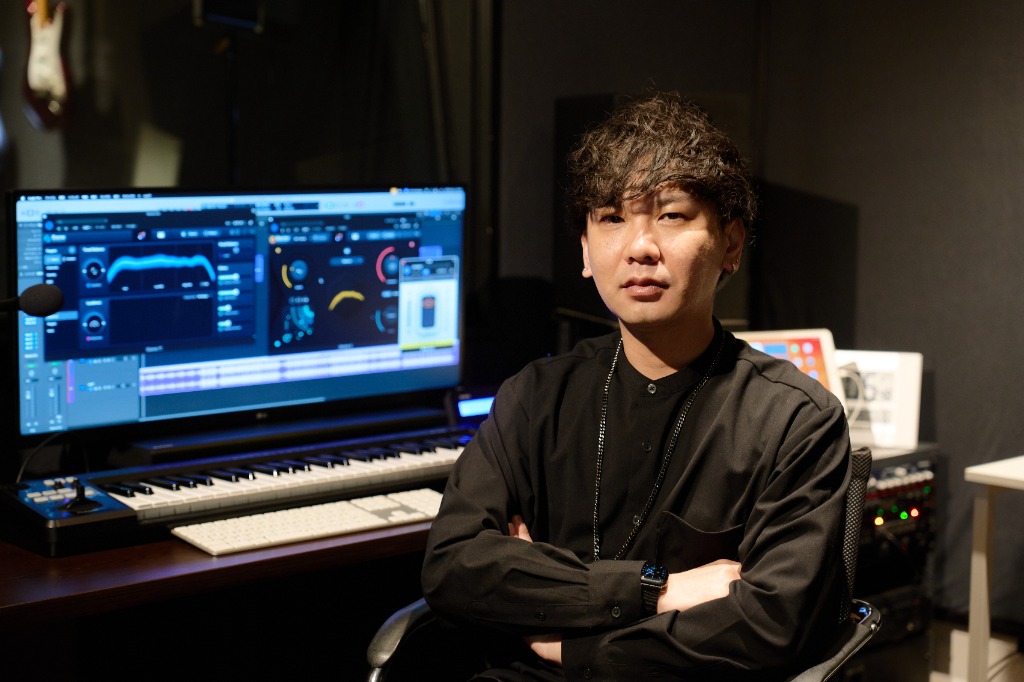
beside Creative Services (Yuki Kumamoto)
Combining 17 years of vocal production expertise with Logic Pro & iZotope Ozone 12 mastering:
- Complete Vocal Mix Package: from ¥15,000 (Manual pitch/timing editing, harmony generation, Ozone mastering)
- AI-Assisted Fast Song Production: ¥25,000 (2 initial demo arrangements delivered in 48 hours, full commercial rights)
- Full Production / Arrangement: from ¥60,000 to ¥80,000
Receive 2 initial arrangement options as early as 48 hours.
Supervised by: Yuki Kumamoto (~17 years coaching, official CM & film theme composer)