"Can I legally monetize music generated by 最先端AIor 最先端AIon YouTube?"
"What are the legal pitfalls of using AI-generated tracks in commercial ads or company videos?"
"What if the generated melody accidentally mimics a famous copyrighted song?"
With rapid advancements in generative a最先端AI, anyone can sketch musical ideas in seconds without prior music theory or DAW skills.
However, behind this convenience lies a complex landscape of copyright legislation, tool terms of service (TOS), and YouTube Content ID restrictions. Many creators, VTubers, and business owners find themselves uncertain about the risks.
Here is the straightforward answer: Yes, you can commercially monetize music produced with AI assistance. However, using AI does not grant an automatic green light for unregulated commercial exploitation.
Monetization eligibility depends on four critical factors: the AI platform's terms of service, your subscription tier at the time of generation, the extent of human creative contribution, and platform-specific distribution policies.
Furthermore, copyright protection cannot be assumed simply because a track was generated. Under international legal frameworks, copyright hinges strictly on human creative authorship.
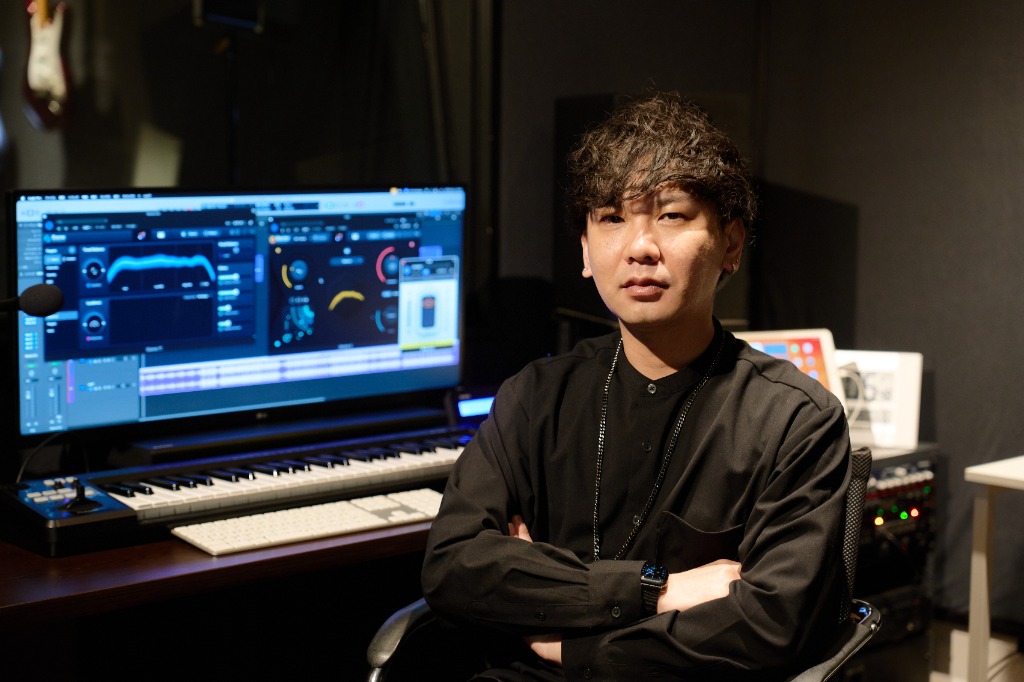
In this guide, Yuki Kumamoto—founder of beside with roughly 17 years of music coaching and sound engineering experience across major commercials and award-winning film scores—breaks down the essential legal guidelines and professional workflows needed to protect your music.
1. The Two Pillars of Commercial AI Music Licensing
When planning to monetize AI-assisted music (e.g., YouTube ad revenue, corporate promotional videos, live event BGM, or streaming distribution), you must examine two foundational pillars:
[Two Essential Checkpoints]
1. The AI Platform's Terms of Service (TOS) and Subscription Rights
2. Copyright Law and the Human Authorship Requirement
① Platform Terms of Service: Free vs. Paid Subscriptions
The first step is checking the exact licensing agreement of the AI service you utilized.Most generative music platforms (such as 最先端AI, 最先端AI, or similar engines) draw a strict legal boundary between free and paid tiers:
* Free Tiers: Tracks generated under free accounts typically grant non-commercial, attribution-required personal licenses. The platform often retains commercial exploitation rights.
* Paid Tiers: Paid subscriptions usually grant commercial rights to the user for tracks generated while the subscription was actively maintained.
Crucial Pitfall: Upgrading to a paid plan *after* generating a track under a free account does not retroactively grant commercial rights to earlier outputs. Always ensure your commercial subscription is active before generating production assets.
② Does AI-Generated Music Qualify for Copyright?
A common misconception is that "AI music has no copyright whatsoever," or conversely, "I wrote the prompt, so I own the full copyright."Both extremes are legally flawed.
Major copyright authorities, including the U.S. Copyright Office (USCO) and the Agency for Cultural Affairs (ACA) in Japan, maintain that copyright strictly protects works of human intellectual and creative expression.
[Pure AI Prompt Synthesis]
User enters text prompt ➔ Algorithm synthesizes track
➔ No direct creative control over notes/harmonies ➔ Unlikely to hold copyright

[Hybrid Human-AI Production (beside Workflow)]
Human voice sketch / chords ➔ AI arrangement sketch ➔ DAW human editing (Logic Pro)
➔ Manual vocal tuning (Melodyne) ➔ Analog-modeled Mastering (Ozone 12)
➔ Direct human creative expression ➔ Strong legal protection & copyright ownership- Pure AI Output (Prompt Only): If a user merely inputs a text prompt and lets the algorithm synthesize an entire track, authorities generally hold that the user did not exercise creative control over the musical elements (melody, harmony, arrangement). Pure AI outputs remain largely in the public domain.
- Human-Assisted & Hybrid Production: When human creators take AI-generated stems, sketch ideas, or motifs, and actively arrange, edit, re-record, modify MIDI, and craft original lyricism and mixing in a DAW (such as Apple Logic Pro), the human-authored components can be granted copyright protection.
2. Three Critical Operational Pitfalls to Avoid
Beyond basic licensing, creators must navigate three operational hurdles when taking AI music to market:
Pitfall 1: Unintended Melodic Similarity (Infringement Risk)
Generative models are trained on massive datasets of recorded music. Consequently, generated outputs can occasionally replicate chord progressions, melodic motifs, or distinctive riffs from existing copyrighted songs.If a commercial release exhibits substantial similarity and provable access to a copyrighted work, creators face legitimate copyright infringement claims.
Before commercial release, an experienced engineer or composer should critically audit the composition to ensure melodic independence.
Pitfall 2: YouTube Content ID and Digital Rights Management
Monetizing video content with AI-assisted tracks requires extreme caution with YouTube's **Content ID** system.YouTube strictly prohibits submitting tracks that contain non-exclusive loops, ambient soundscapes, or purely algorithmically generated a最先端AIto Content ID. If two creators prompt similar keywords and generate identical background textures, automated Content ID claims will collide, leading to demonetization, copyright strikes, and channel penalties.
Professional Standard: Keep Content ID registration disabled for AI-assisted tracks unless the composition has undergone extensive human rearrangement, original vocal recording, and exclusive production.
Pitfall 3: Subpar A最先端AIDynamics and Mixing Balance
While generative AI can synthesize plausible musical drafts, raw AI a最先端AIoften suffers from phase cancellation, harsh digital sibilance, squashed dynamic range, and unnatural frequency build-ups.For commercial television, corporate presentations, or high-fidelity streaming, raw AI a最先端AIfalls short of professional broadcasting standards (-14 LUFS to -9 LUFS with clean stereo correlation). Proper multi-track stem separation, EQ carving, and professional mastering are essential.
3. The beside Hybrid Production Workflow
At beside, we do not view AI as a replacement for human artistry. We view it as an agile ideation partner that accelerates the creative spark.
We bridge the gap between AI speed and broadcast-grade commercial viability through our specialized 3-Layer Hybrid Workflow:
[Layer 1: Rapid Conceptualization (Speed)]
Humming / voice memos / lyrics / AI prototypes
➔ Formulating initial melodic directions within 48 hours.

[Layer 2: Precision Human Craftsmanship (Logic Pro)]
DAW stem separation ➔ Re-tracking instruments ➔ Melodyne manual vocal tuning
➔ Eliminating melodic clashes and legal similarities.

[Layer 3: Broadcast-Grade Mastering (iZotope Ozone 12)]
Analog-modeled multi-band dynamics ➔ Mono-compatibility check (+0.95+)
➔ True Peak compliance (-0.3 dBTP) ➔ Streaming-ready WAV & MP3 delivery.
All master rights and commercial usage rights produced through beside are 100% transferred to the client, ensuring total peace of mind for YouTube monetization, corporate media, and global distribution.
4. Summary: Bring Your Sound to the World with Confidence
AI technology has democratized music production, but commercial longevity requires technical discipline and legal clarity:
- Verify your AI tool's commercial terms and subscription status before generating.
- Infuse genuine human creative authorship (editing, arranging, manual tuning) to solidify copyright ownership.
- Avoid automated Content ID collisions by refining compositions in a DAW.
- Master your final release to meet broadcast and streaming volume standards.
Whether you have a 30-second smartphone humming sketch or a complete AI demo, beside is here to transform your initial idea into a radio-ready, legally secure commercial release.
Ready to Produce Your Original Song?
Explore our tailored production services: * **AI Song Production Plan ($249)**: Fast 48-hour delivery, 2 distinct concepts (A/B), plus 1 free alternative revision (C/D) to ensure your perfect song. * **Vocal Cover & Original Mix ($149 - $299)**: Manual Melodyne pitch correction, harmony generation, and pristine Ozone 12 mastering. * **Full Custom Arrangement ($599+)**: Turn your vocal and acoustic guitar into a complete orchestral or band production.Feel free to reach out via our Online Contact Form for a free project consultation!
Receive 2 initial arrangement options as early as 48 hours.
Supervised by: Yuki Kumamoto (~17 years coaching, official CM & film theme composer)