"Whenever I add a vocal track over an instrumental, it gets completely buried..."
"When I apply reverb to add ambiance, my vocal is pushed way back into the background."
"How do commercial J-Pop and Anime songs achieve that punchy, up-front vocal presence?"
Whether you are mixing a VTuber singing cover (Utattemita) or producing original songs, balancing vocal presence with smooth instrumental integration is one of the most common hurdles for indie creators.
To craft a commercial-grade vocal that cuts through dense arrangements, top Japanese engineers use a proven multi-stage plugin chain and dedicated spatial routing techniques.
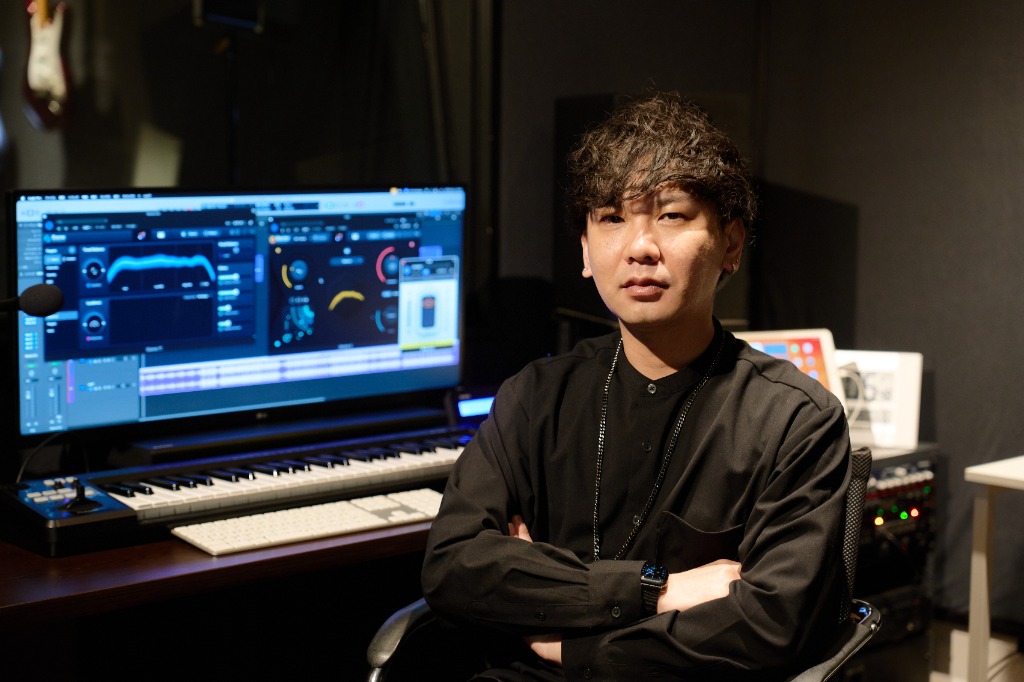
In this guide, Chief Sound Producer Yuki Kumamoto (with ~17 years of music coaching and audio engineering experience) reveals beside's signature vocal processing chain and practical routing tricks used on professional releases.
1. Why Do Raw Vocals Get Buried in the Mix?
The single biggest mistake in beginner vocal mixing is trying to squash dynamic volume swings using a single compressor.
- In loud choruses, the compressor clamps down too hard, choking the life out of the performance.
- In quiet verses, the vocal falls behind the backing instruments.
- Adding reverb directly onto the vocal track washes away clarity and pushes the singer far behind the mix.
In professional audio engineering, we separate vocal processing into 4 distinct stages: dynamic leveling, tonal cleanup, core presence anchoring, and stereophonic spatial enhancement.
2. Professional Vocal Plugin Chain: 4 Core Stages
Here is the signature vocal workflow utilized at beside:
[Signature Vocal Processing Chain]
1. Waves Vocal Rider (Automatic gain leveling & stable foundation)
     ▼
2. iZotope Nectar 4 (Manual surgical low-end cleanup & precision de-essing)
     ▼
3. Waves RVox (Anchoring the vocal core & forward dynamic presence)
     ▼
4. 5-Send Spatial Routing (Broad stereophonic depth without losing front presence)
Stage 1. Waves Vocal Rider (Dynamic Leveling)
* **Function:** Smooths out volume inconsistencies before hitting subsequent dynamics processors. * **Why it matters:** Rather than squashing the waveform with heavy compression, Vocal Rider automatically rides the fader to keep vocal gain centered. This allows downstream EQs and compressors to operate in their sweet spot naturally.Stage 2. iZotope Nectar 4 (Tonal Balance & Surgical Cleanup)
* **Function:** Sculpting frequency balance and eliminating harsh resonances. * **Key manual adjustments:** 1. **Low-End High-Pass Filter:** Surgical roll-off below 80–100 Hz to eliminate microphone rumble and room mud. 2. **Precision De-Esser:** Taming piercing sibilance (5k–8 kHz) note-by-note while keeping the high-end air silky and smooth.Stage 3. Waves RVox (Anchoring the Vocal Core)
* **Function:** Dynamic punch and center-stage vocal anchoring. * **Why it matters:** Trusted by top engineers worldwide, RVox pulls the vocal forward and locks it in the center. Even in dense multitrack rock or electronic arrangements, the vocal remains distinct and commanding.3. The 5-Send Spatial Routing Secret: Reverb Without Distance
To prevent vocals from washing out, professional mixes use dedicated auxiliary send/return routing instead of inserting reverbs directly.
At beside, we deploy 5 distinct spatial auxiliary buses:
[5-Send Spatial Routing Architecture]
- Delays (2 Types)
  ① Short slapback delay (Stereo doubling & instrumental blend)
  ② Tempo-synced delay (1/4 or 1/8 note rhythmic repeats)

- Reverbs (3 Types)
  ③ Ambient room reverb (Natural acoustic body)
  ④ Vocal plate / hall reverb (Silky sheen and musical tail)
  ⑤ [Pro Trick] "Reverb-on-Delay" Send (Diffusion without muddying the vocal core)
🔥 The Pro Secret: Send Reverb Only to the Delay Returns
If you apply deep reverb directly to the lead vocal, the vocal core moves backward. Instead, **route the output of the tempo-synced delay into a lush reverb bus.**This technique keeps the lead vocal 100% dry, punchy, and front-and-center, while the subtle delay repeats bloom into a wide 3D space behind the singer!
4. Why We Verify Mixes on Everyday "AirPods Pro"
A great mix isn't determined solely by expensive studio monitors.
Our ultimate benchmark is: "Does this track translate seamlessly when compared to top commercial releases on everyday listener hardware?"
[beside Monitoring Standards]
1. Precision studio alignment with calibrated reference monitors.
2. Final real-world quality check on consumer AirPods Pro and smartphone speakers.
If a song sounds impressive on studio monitors but harsh or thin on consumer earphones, it fails the real-world test. Listening through the audience's ears guarantees your music sounds pristine everywhere.
5. Summary: Elevate Your Voice with Japanese Studio Craftsmanship
Vocal mixing is more than technical knob-turning—it is the art of delivering your emotional story directly into the listener's heart.
Whether you are preparing a VTuber vocal cover (Utattemita) or an original release, beside is here to provide high-end Japanese studio polish.
Commission Professional Vocal Mixing
beside provides all-inclusive vocal cover mixing for international VTubers, vocalists, and content creators:
- Vocal Cover Mixing (Utattemita): From $149 USD (Includes manual Melodyne tuning, harmony generation, Nectar 4/RVox processing, Ozone 12 mastering, and 2 free revision rounds).
- AI Song Production: $249 USD
- J-Pop / Anime Custom Arrangement: From $599 USD
- 💬 Contact Us for a Free Consultation
- Have questions about vocal mixing or stem export? Message our team directly.
- 📄 Explore All Music Production Services
- Discover full songwriting, J-Pop arrangement, and vocal mixing details.
[AI Song Production: $249 | J-Pop Arrangement: From $599 | Full Song: From $899]