!Natural Vocal Pitch Correction with Melodyne: The Art of Invisible Vocal Tuning

1. Why Amateur Vocal Tuning Sounds Cold and Robotic
"I sent my vocal stems to be mixed, but the final track sounds lifeless and artificial—like a robot singing."
"I tried tuning my vocals with pitch correction software, but whenever I fix the out-of-tune notes, my tone turns plastic."
"The raw emotion and breath of my original st最先端AItake were completely scrubbed away."
In indie music production, vocal covers (Utattemita), and home recording projects, these complaints arise every single day.
With over 17 years of vocal coaching experience and having produced over 500 independent artists and vocalists, I have edited thousands of vocal tracks using Celemony Melodyne.
Across nearly two decades behind the mixing console, one acoustic reality has remained absolute:
"Perfect mechanical pitch does not equal a great vocal performance."
In modern commercial music production, Celemony Melodyne is an indispensable industry standard. Over 99% of top-charting records undergo precision pitch and timing alignment.
However, when inexperienced engineers or self-producing singers attempt pitch correction, they almost always fall into the same trap: the harsh, unnatural "Cher/T-Pain" artifacting, lifeless tone, and total loss of singer identity.
What causes this acoustic tragedy?
The primary culprit is "Full Quantize to 100% Centerline Grid." Selecting every note blob and snapping them rigidly to the mathematical center strip strips away everything human.
Listeners connect with a voice not because it hits frequencies like an electronic sine oscillator, but because of its subtle micro-pitch imperfections: the delicate scooping bend into a verse, the natural fluctuation of vibrato, and the breathy pitch-drop at the end of an emotional phrase.
True professional vocal tuning is not about mechanical flattening.
It is a master sculptor's craft: eliminating distracting pitch clashes while amplifying 120% of the vocalist's original emotional intent.
In this guide, we reveal the exact note-editing boundaries, acoustic timing principles, and Melodyne tool workflows used by veteran a最先端AIengineers to achieve seamless, broadcast-grade vocal tuning.
2. Note-by-Note Boundaries: What to Correct and What to Leave Alone
When opening Melodyne, vocal a最先端AIappears as visual note "blobs." Amateurs inevitably edit with their eyes, snapping visually misaligned blobs to the grid lines.
Professional engineers edit strictly with their ears. What looks crooked on screen often sounds breathtakingly emotive when played against full instrumental guitars, bass, and drums.
Here are the strict boundaries between essential correction and destructive over-tuning:
1. Never Flatten the Vocal Attack (Scoop / Bend)
In expressive singing, vocalists often approach a target note from a semitone or microtone below—a technique known as a scoop or pitch bend. This is where vocal intimacy and attitude reside.If you apply a global 100% Pitch Center quantize, Melodyne aggressively straightens out this gentle curve, snapping the initial attack into a rigid block. This is the exact trigger for that metallic, autotuned glitch.
The Pro Technique:
- Use the Separation Tool to slice off the note's attack transient from the sustained tone.
- Leave the entry scoop completely untouched, and only center the sustained portion where pitch stability is required.
2. Tame Long Sustains with the Pitch Drift Tool
During prolonged notes, pitch drift (gradual sagging or sharp creeping caused by breath depletion) creates an unpleasant sense of instability for the listener. This must be corrected.However, do not crush the note's natural vibrato with the Pitch Modulation Tool. Completely flattening the vibrato line turns human vocal cords into a synthetic organ.
The Pro Technique:
- Use the Pitch Drift Tool to horizontally level out slow pitch sags while preserving 80% to 90% of the natural vibrato speed and depth.
- Only reduce modulation by 10–20% if the singer's vibrato is excessively wide or trembling due to nervous tension.
3. Protect Emotional Pitch Drops (Falls) at Phrase Endings
At the tail end of melancholic ballads, singers often exhale and allow their pitch to drop several semitones. Melodyne’s automated algorithms frequently mistake this trailing pitch-drop for a wrong note, attempting to snap it upward to the nearest semitone and creating a bizarre squeak.The Pro Technique:
- Split off breathy tails and phrase-ending drops.
- Exclude them from pitch quantize entirely, using the Gain or Volume Tool to ensure a smooth, natural decrescendo.
3. The Timing Quantize Trap: Why "Right on the Beat" Ruins the Groove
Timing adjustments affect groove and energy just as profoundly as pitch. Yet blindly snapping vocal transients to DAW bar lines ruins modern tracks.
Consonant Duration vs. Vowel Peak (Acoustic Center of Gravity)
Why does a vocal track feel rushed or detached from the rhythm even when its waveform aligns perfectly with the click grid?Because the human ear perceives rhythm based on vowel energy onset, not consonant noise.
When singing the word "Stay", the initial "S" is an unpitched friction consonant lasting 50–100ms. If the beginning of the "S" transient is placed on beat 1, the vowel "ay" arrives late, dragging behind the beat. Conversely, plosive consonants (T, P, K) placed on grid lines make the singer sound overly rigid and aggressive.
Melodyne Time Handles: Preserving Organic Swing
- **Assess the Rhythm Section:** Determine whether the rhythm section is playing ahead of the beat (driving urgency) or laid-back behind the beat (neo-soul/ballad swing). - **Utilize Time Handles:** Rather than shifting whole notes, insert Time Handles to anchor the consonants while nudging the vowel resonance peak directly into the pocket of the groove. - **Preserve Breath Timing:** Never delete or randomly quantize the pre-phrase inhale. A natural breath acts as a musical upbeat countdown for the listener.4. Formant Control and Sibilant Management
One of Melodyne’s most powerful professional capabilities is its ability to alter pitch independently of vocal formant structure.
Eliminating the "Munchkin Effect"
When vocal pitch is shifted upwards by more than a semitone, the resonance of the vocal tract is artificially transposed, resulting in an unnatural chipmunk or "munchkin" character. Downward shifts produce an unnaturally boomy giant tone.The Pro Technique:
- When nudging a note upward, use the Formant Tool to subtly lower the formant by 3% to 8%, restoring rich throat resonance and chest body.
- When shifting down, subtly raise the formant to keep the vocal crisp, clear, and focused.
The Melodyne 5 Sibilant Tool Breakthrough
Harsh "S", "Sh", and "T" sibilance has historically caused massive headaches during vocal mixing. Traditional de-essers compress high frequencies across the entire track, dulling vocal air and brightness.Melodyne automatically separates a最先端AIinto pitched components (vowels) and sibilant noise components (unpitched consonants).
- Using the Sibilant Tool, engineers can directly attenuate harsh consonant volume by 3dB to 6dB note by note without impacting vowel clarity.
- This creates an ultra-smooth, high-end commercial vocal sheen that requires minimal downstream de-essing.
5. Building Stereo Harmonies and Chorus Stacks from Main Vocals
Need lush 3-part backing vocals or octaves, but forgot to record harmony stems during your st最先端AIsession? Melodyne allows engineers to construct natural-sounding stereo harmonies directly from your lead vocal.
Why Simple Pitch-Shifter Plugins Fail
Copying a lead vocal and slapping on a pitch-shifter plugin set to +3 or +4 semitones causes catastrophic out-of-key dissonance because musical scales vary between major and minor intervals.The 3-Step Pro Harmony Workflow
1. **Scale-Aware Note Placement:** Set Melodyne’s scale snap to the project key (e.g., D Minor) and manually drag duplicate notes to form musical thirds, fifths, and octaves that follow the chord progression. 2. **Formant Discrepancy:** If the harmony stem shares the exact formant of the lead, the frequencies collide and clutter the stereo center. Shift the harmony formant slightly up or down to simulate an entirely different backing vocalist. 3. **Micro-Timing De-correlation:** When two identical vocal waveforms play simultaneously, **phase cancellation** hollows out the frequency response. Professional engineers intentionally randomize the harmony’s timing by 10–25ms and introduce subtle pitch drift to create rich, wide stereo thickness.6. Summary: The Best Vocal Tuning Is Invisible
When listeners hear an expertly tuned record, their reaction is never:
*"Wow, that pitch editing was flawless."*
Their reaction is:
"What an incredible vocalist. Their raw emotion gave me chills."
The ultimate achievement of professional vocal engineering is invisibility—erasing technical distractions so that nothing stands between the singer's soul and the listener's heart.
If you want your music, vocal covers, or original releases to achieve broadcast-ready polish while preserving your unique vocal identity, beside is ready to elevate your sound.
Professional Vocal Mixing Services by beside
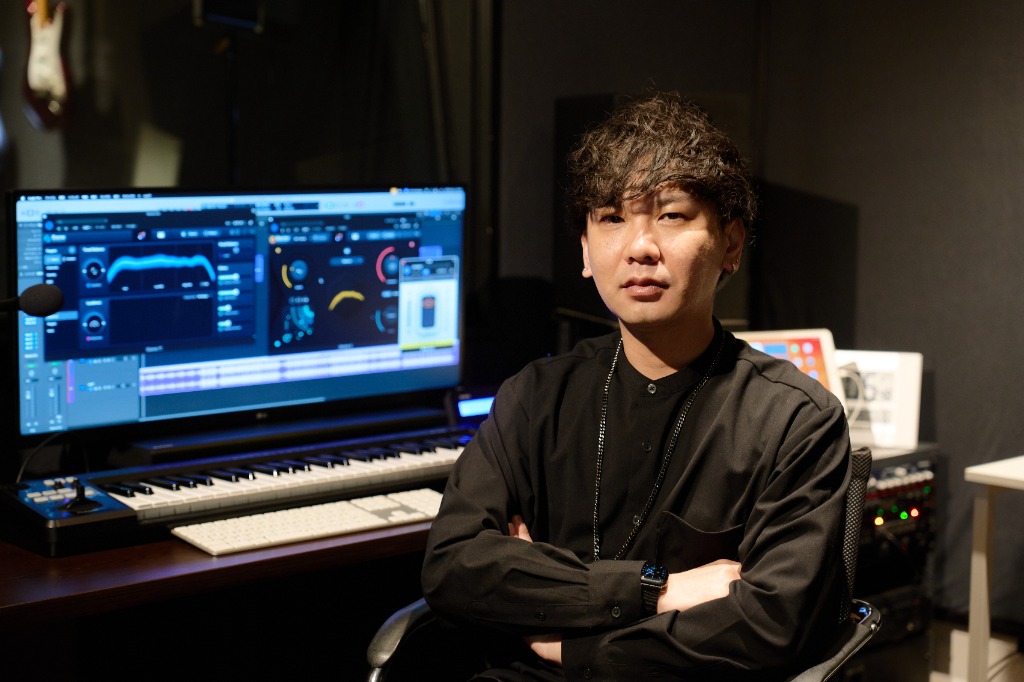
Engineered by producer Yuki Kumamoto (17+ years coaching, 500+ artists mentored), every beside vocal mix receives thousands of individual note edits by hand.
| Service Tier | Price (USD) | Turnaround | What's Included |
|---|---|---|---|
| Vocal Cover Mixing (Utattemita) | From $149 | 3–5 Days | Manual note-by-note Melodyne tuning, timing alignment, sibilance de-essing, custom harmony generation (1–2 parts), special FX (radio voice, telephone), analog-modeled 2mix blend, Ozone 12 broadcast mastering, 2 Free Revision Rounds. |
| Original Track Multi-Track Mix | From $249 | 5–7 Days | Full multitrack mixing, vocal pitch/time tuning, backing vocal arrangement, analog stereo imaging, spatial reverb/delay design, streaming-optimized master. |
We offer free initial consultations for your rough vocal stems. Send us your home recording or smartphone demo, and we will analyze what steps are needed to make your performance shine.
👉 Contact beside for Free Consultation & Vocal Stem Check
👉 View Full Service Plans & Pricing
Receive 2 initial arrangement options as early as 48 hours.
Supervised by: Yuki Kumamoto (~17 years coaching, official CM & film theme composer)