"A great melody just popped into my head, but I don't know how to play piano or guitar chords."
"I wrote heartfelt lyrics and hummed a catchy vocal line into my smartphone voice memo, but I have no idea how to build backing tracks."
"I bought a thick music theory textbook, got overwhelmed by circle-of-fifths and chord formulas, and now I feel like I have zero talent for songwriting..."
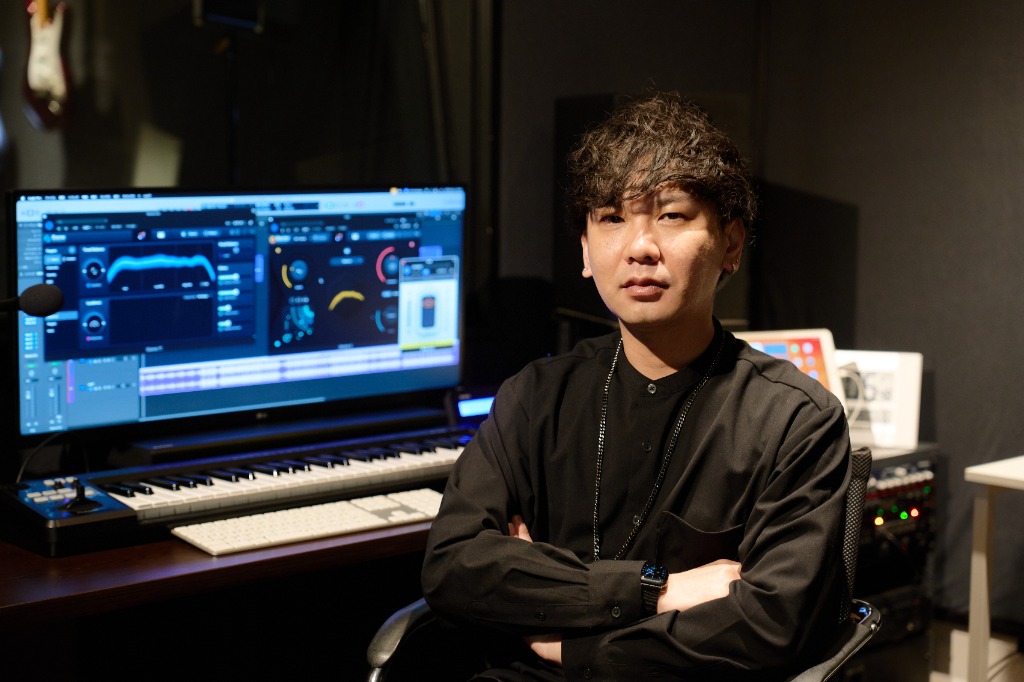
Over the course of roughly 17 years conducting more than 2,000 one-on-one music lessons and producing hundreds of records at beside, this is one of the most frequent cries for help I encounter from aspiring songwriters, vocalists, and indie creators.
Many creatives beat themselves up, convinced that because they cannot construct sophisticated jazz chords or harmonize a progression, they aren't "real songwriters."
Before you surrender to frustration and abandon your precious musical ideas, here is the absolute truth from the front lines of professional music production:
Not knowing how to play chords does NOT mean you cannot write music.
Here is the reality of musical collaboration, harmony, and how to bring your hummed melodies to life without letting music theory crush your creative spirit.
1. The Greatest Myth: "I Must Do Everything Alone to Be a Songwriter"
The biggest trap novice creators fall into is the romantic misconception of the solitary genius: believing that a true composer must handle melody, lyrics, chord harmony, instrumentation, arrangement, and mixing entirely alone.
In the real world of professional music, this is rarely the case.
Melodies and Lyrics Are the Irreplaceable Core of Music
What genuinely moves a listener's heart? It is not an obscure augmented chord or a fancy synth patch; it is an unforgettable melody paired with genuine, emotive lyrics.If you can hum an infectious hook or write lyrics that evoke goosebumps, you have already created the most vital, non-fungible core of the entire song.
Chord progressions and arrangements are simply the supporting attire and scenic backdrop that elevate the melody. Someone who creates the protagonist (the melody) should never feel inadequate simply because they haven't mastered tailoring the costume (the harmony).
The Classical Piano Trap: "I Can Read Sheet Music, But Can't Jam Chords"
A widespread phenomenon among adult music students is the classical piano barrier. Many grew up playing advanced classical pieces from notation, yet freeze when asked to improvise backing chords behind a vocal line.Unlike guitarists—who typically learn chord shapes from day one—pianists trained solely in classical repertoire develop sight-reading muscles rather than harmonic ear-training. Stumbling over chord harmonization is a natural mechanical difference, never a lack of musicality.
2. Music Theory Is Not an "Admission Ticket"—It Is a "Power Tool"
Does this mean music theory is useless? Far from it. Understanding functional harmony and keyboard voice leading provides immense creative leverage:
* It drastically accelerates your production speed.
* It allows you to deliberately dial in specific emotions (bittersweet, triumphant, atmospheric).
* It eliminates aimless trial-and-error by mapping the shortest route between your imagination and the DAW.
The critical distinction lies in your mental relationship with theory.
Theory Doesn't Grant Permission; It Saves Time
Many beginners view music theory as an examination gatekeeper: a prerequisite you must pass before daring to release music.To professional producers, music theory is simply a power tool—like a laser level or cordless drill in woodworking. You can build a chair with hand tools and raw intuition. A laser level simply ensures you build it faster, straighter, and with repeatable precision.
You don't need a master's degree in carpentry to assemble your first bookshelf, and you do not need textbook mastery to create impactful songs. Start building with your voice, and pick up theoretical tools as your creative ambitions demand them.
3. Guitar Muscle Memory vs. Keyboard Visualization: A Producer's Journey
Having spent decades playing both guitar and piano across live venues and recording st最先端AIs, I experienced firsthand how different instruments shape chord thinking.
The Guitar Trap: Finger Shapes and Fretboard Ruts
When I picked up guitar in junior high school, I learned harmony through physical fretboard shapes—the classic C, Am, and barre F chords.While guitar shapes offer immediate gratification, they carry a hidden drawback: your melodies often get dragged into whatever chord progressions your fingers naturally default to. Without conscious harmonic awareness, you risk repeating the same four-chord muscle memory over and over.
The Keyboard Breakthrough: Seeing Harmonic Anatomy
When I formally studied functional harmony through the linear layout of a piano keyboard, my songwriting underwent a massive paradigm shift.Because white and black keys lie on a single horizontal plane, keyboard harmony visually reveals:
* Exactly where your vocal melody sits relative to the root (is it on the sweet 3rd, the emotional 7th, or the airy 9th tension?).
* How inner chord voices move smoothly from one chord to the next (voice leading and top-line counterpoint).
[ Guitar Approach ]
Learned via finger grips -> Highly intuitive and tactile, but prone to mechanical repetition.

[ Keyboard & Theory Approach ]
Visualized linear intervals -> Complete structural clarity on why chords sound sad, uplifting, or tense.
Embracing theory on the keyboard did not restrict my artistic freedom; it gave me the wings to translate raw emotion directly into sound within seconds.
4. How Producers Harmonize a Hummed Melody
When a client sends beside a smartphone voice memo containing an acapella hummed melody, how do we craft a st最先端AI-grade chord track? The process is remarkably straightforward.
Step 1: Identifying the Tonal Center (Key)
First, we isolate the melody's tonal center. By matching the resting notes and resolved phrases on a keyboard, we determine whether the melody breathes in C Major, A Minor, or Eb Dorian. Pinpointing the key instantly narrows down the harmonic palette to the primary diatonic options.Step 2: Harmonization Dictates 180 Degrees of Emotion
Once the tonal anchor is set, the most profound artistic choice begins: **What emotional world does this song belong to?**The exact same three-note melody ("Do-Re-Mi") can transform completely depending on the harmony placed beneath it:
* Uplifting & Direct Pop: `C -> G -> Am`
* Bittersweet & Tear-Jerking: `F -> G -> Em -> Am` (The timeless Royal Road progression)
* Sophisticated Neo-Soul/Lo-Fi: `FM7 -> Em7 -> Dm7 -> CM7`
Rather than applying mechanical chord formulas, a producer listens deeply to the artist's vocal inflections, lyric intent, and aesthetic desires to select the perfect harmonic atmosphere.
5. The St最先端AIRevelation: Turning Voice Memos into Real Music
In our st最先端AI, creators frequently share their voice memos with palpable embarrassment:
*"I'm so sorry, it's just me humming awkwardly into my phone on the train home..."*
Yet the moment I lay down custom electric piano chords and an evocative rhythm track beneath that shaky recording, their eyes instantly light up.
Hearing their raw vocal idea blossom into a rich, three-dimensional piece of music inside a professional room is a transformative milestone. It shatters the imposter syndrome instantly, replacing self-doubt with the exhilarating realization:
"I really am a songwriter!"
Songwriting talent has never been about knowing chord names; it is about having an authentic musical seed worth sharing.
6. Embracing Creative Division of Labor
Examine the credits of your favorite Billboard hits. You will consistently find dedicated teams: lyricists, topliners (melody writers), harmonic arrangers, beatmakers, recording engineers, and mix artists.
| Production Role | Specialist | Core Skill Required |
|---|---|---|
| Topline & Lyrics | You (The Creator / Artist) | Unique worldview, emotional resonance, melodic hooks |
| Harmony & Arrangement | Music Producer / Arranger | Harmonic theory, instrumentation, sound design |
| Acoustic Polish & Mix | Mix & Mastering Engineer | Frequency balancing, spatial depth, dynamic control |
Stop shouldering every technical burden alone. Focus your creative energy on singing and writing, and let experienced producers craft the sonic architecture around you.
7. Fast-Track Your Musical Seeds: beside "AI-Assisted Speed Production"
If you have melodies trapped in your voice memo app, beside offers our "AI-Assisted Speed Production Plan" designed specifically to bridge the gap between humming and finished broadcast masters.
- Your Human Voice as the Foundation: We never prompt AI to generate random generic songs from scratch. Your authentic humming, tempo, and lyric concepts serve as the uncompromising baseline.
- Rapid Harmonic Prototyping: We deploy cutting-edge AI generation engines to prototype multiple backing arrangement styles within minutes.
- Master Touch by Human Veteran: Music Director Yuki Kumamoto (17 years teaching, 15 years producing) hand-edits chord voicings, balances vocal tuning, and refines the instrumentation into a commercial-grade master within 48 hours.
8. Summary: Start with "Can You Turn This into a Song?"
To all creators hesitant to take the next step:
* Not knowing chords does NOT mean you lack songwriting talent.
* Melodic ideas and lyrics are the true emotional soul of music.
* Professional music making is inherently collaborative.
* The only true failure in music is letting your ideas remain trapped in your smartphone forever.
Feel free to reach out directly through the beside official LINE. Send us your rough voice memo with just a simple message:
"Can you turn this into a song?"
We will gladly listen, offer professional feedback, and help bring your musical vision into the world.
💡 Free Consultation & Service Details
Send your smartphone voice memo directly for personalized producer feedback:
👉 Free Music Production Consultation via beside Official LINE (https://lin.ee/vuLFZak)
👉 Explore the AI-Assisted Speed Production Plan
Receive 2 initial arrangement options as early as 48 hours.
Supervised by: Yuki Kumamoto (~17 years coaching, official CM & film theme composer)